


The Evolution of AI Agents
AI agents represent a fundamental shift from reactive chat interfaces to proactive autonomous systems. Unlike simple question-answering bots, modern AI agents can decompose complex goals, plan multi-step workflows, use tools to interact with external systems, maintain context across long-running tasks, and adapt their approach based on feedback.
The technology has reached production readiness. Companies are deploying agents for automated research, code generation and debugging, document processing and analysis, customer service workflows, and data science tasks. The question is no longer whether agents work—it's how to build them reliably.
Production-Ready Frameworks
I specialize in three battle-tested frameworks, each with distinct strengths:
LangChain excels at building modular, production-ready AI pipelines. Its strengths include flexible component composition, extensive tool ecosystem, strong community support, and mature integrations with vector databases, APIs, and data sources. I use LangChain for chatbots with memory, research automation systems, document analysis pipelines, and RAG (Retrieval Augmented Generation) applications.
AutoGen (Microsoft) specializes in multi-agent conversational AI and collaborative workflows. It enables agents to communicate and cooperate semi-autonomously or fully autonomously, making it ideal for code generation and execution, collaborative problem-solving, human-in-the-loop systems, and complex multi-step automation. Real-world deployments include pharmaceutical data compliance at Novo Nordisk and automated financial analysis systems.
CrewAI structures AI into specialized agent "crews" that mirror human team dynamics. Each agent has a defined role, responsibility, and expertise. This framework excels at AI-driven stock analysis and financial research, software development assistance (code suggestions, bug detection), customer service optimization (call analytics, chatbot testing), marketing campaign planning and content generation, and recruitment workflow automation. Its two-layer architecture (Crews and Flows) balances high-level autonomy with low-level control.
Agent Capabilities I Build
- Autonomous Task Execution: Agents that take high-level instructions and figure out how to achieve them. They break complex goals into steps, execute each step, verify results, handle errors gracefully, and report outcomes. This goes far beyond simple automation—it's intelligent problem-solving.
- Tool-Augmented Intelligence: The power of agents comes from tool use. I equip agents with capabilities to search databases and web content, call internal and external APIs, execute code safely in sandboxed environments, read and manipulate files, send notifications and communications, and interact with any system your business uses. Tools transform LLMs from language models into action takers.
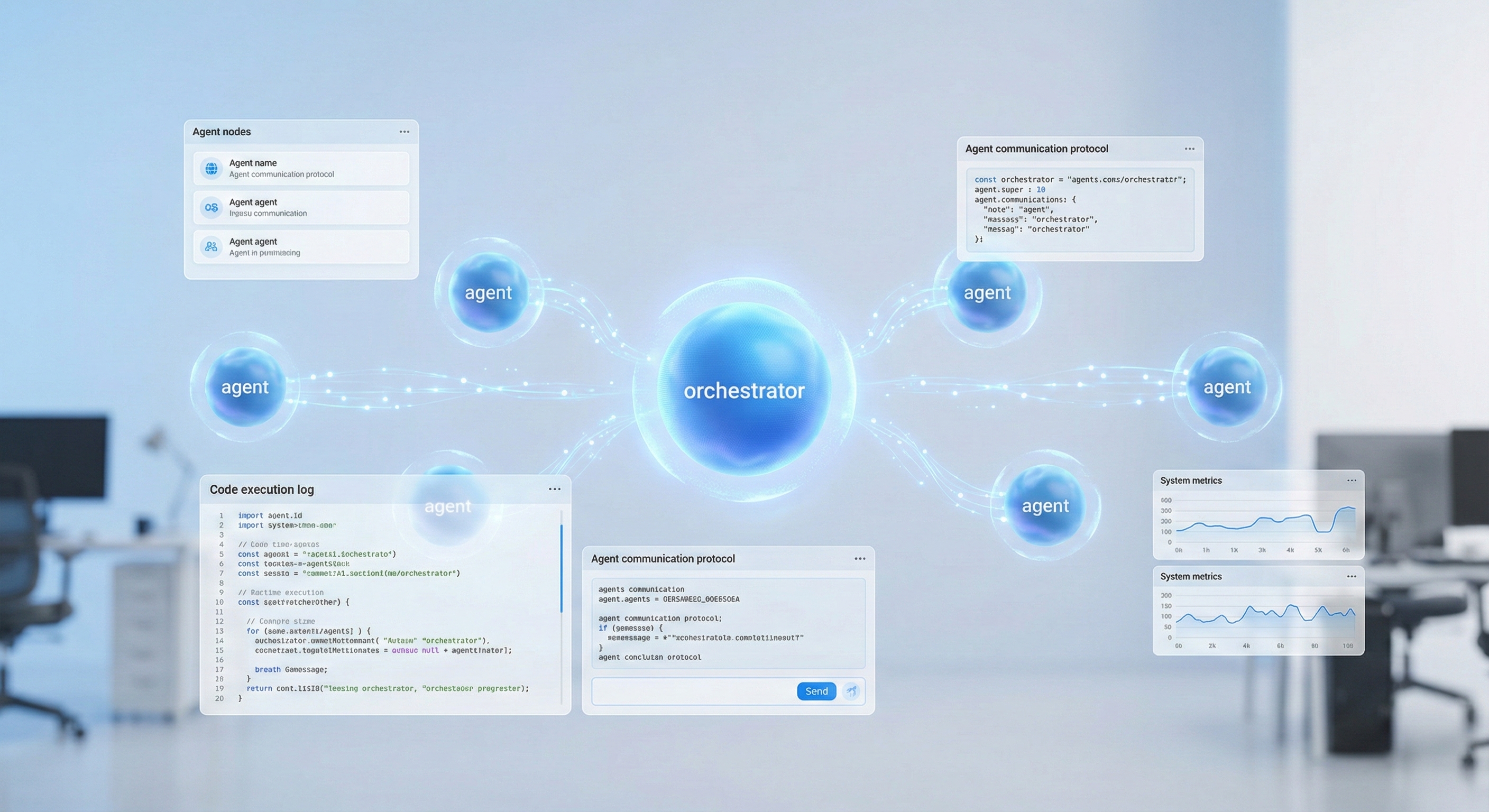
- Multi-Agent Orchestration: For complex workflows, I design systems where specialized agents collaborate. A research agent gathers information, an analysis agent processes it, a writing agent creates output, and a QA agent validates quality. This division of labor mimics high-performing human teams and produces better results than single-agent systems.
- Memory and Context Management: Effective agents maintain state across conversations and tasks. I implement short-term memory for conversation context, long-term memory for user preferences and history, vector memory for semantic search over past interactions, and structured memory for tracking workflows and decisions. Memory makes agents feel less like tools and more like teammates.
From Prototype to Production
The gap between demo and deployment is where most agent projects fail. Production-ready agents require comprehensive infrastructure:
Testing Systems include unit tests for individual agent components, integration tests for multi-agent workflows, performance tests under load, security tests for input validation and sanitization, and regression tests for model updates. All testing leverages both automated tools and human-in-the-loop auditing.
Monitoring and Observability means comprehensive request tracing, error tracking and alerting, performance metrics (latency, throughput, cost), decision logging for transparency and debugging, and drift detection for degrading performance. You can't improve what you can't measure.
Safety and Guardrails include input validation and sanitization to prevent injection attacks, output filtering for harmful or inappropriate content, rate limiting and cost controls, human escalation paths for sensitive operations, and explicit permission systems for high-risk actions. Autonomous systems need boundaries.
Real-World Applications
Production deployments span industries: Finance teams use agents for stock analysis and investment research. Software teams leverage code generation, testing, and bug detection automation. Customer service organizations deploy call analytics and response optimization. Marketing departments scale content creation and campaign planning. HR uses automated candidate sourcing and evaluation.
The pattern is clear: agents excel where work is too complex for simple automation but too routine for senior staff. If you have knowledge work that requires judgment but follows patterns, intelligent agents can transform your operations.